

Search engine optimization is entering a new era. People no longer rely exclusively on traditional search results to find information, compare products, or choose services. They also use AI-powered experiences such as ChatGPT Search, Google AI Overviews, and Perplexity for detailed research.
Instead of searching for a short phrase such as “best website design company,” a potential customer might ask, “Which website design company offers affordable WordPress development and SEO services for small businesses?” AI search systems can interpret these detailed questions and create answers from available sources.
Traditional SEO still matters, but websites also need to consider how content is discovered, understood, and referenced by AI-powered search. This guide explains how to strengthen technical access, content quality, credibility, and measurement without promising guaranteed placement.
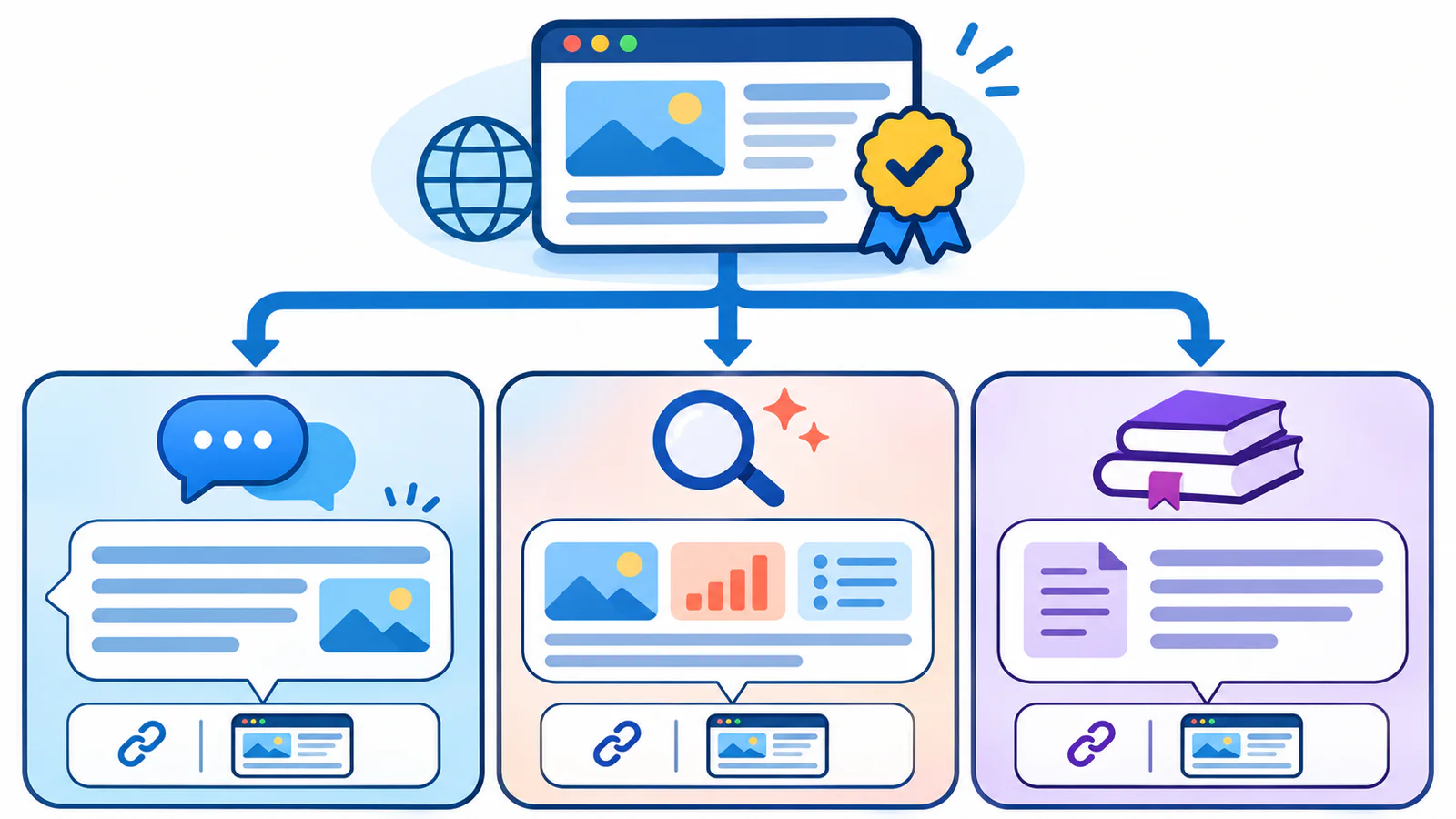
Be discoverable
Keep important public pages indexable, crawlable, fast, and easy to navigate.
Be useful
Answer real questions with original examples, practical detail, and reliable support.
Be referenceable
Make authorship, business information, evidence, and source relationships clear.
Step 1: Understand How AI Search Discovers Websites
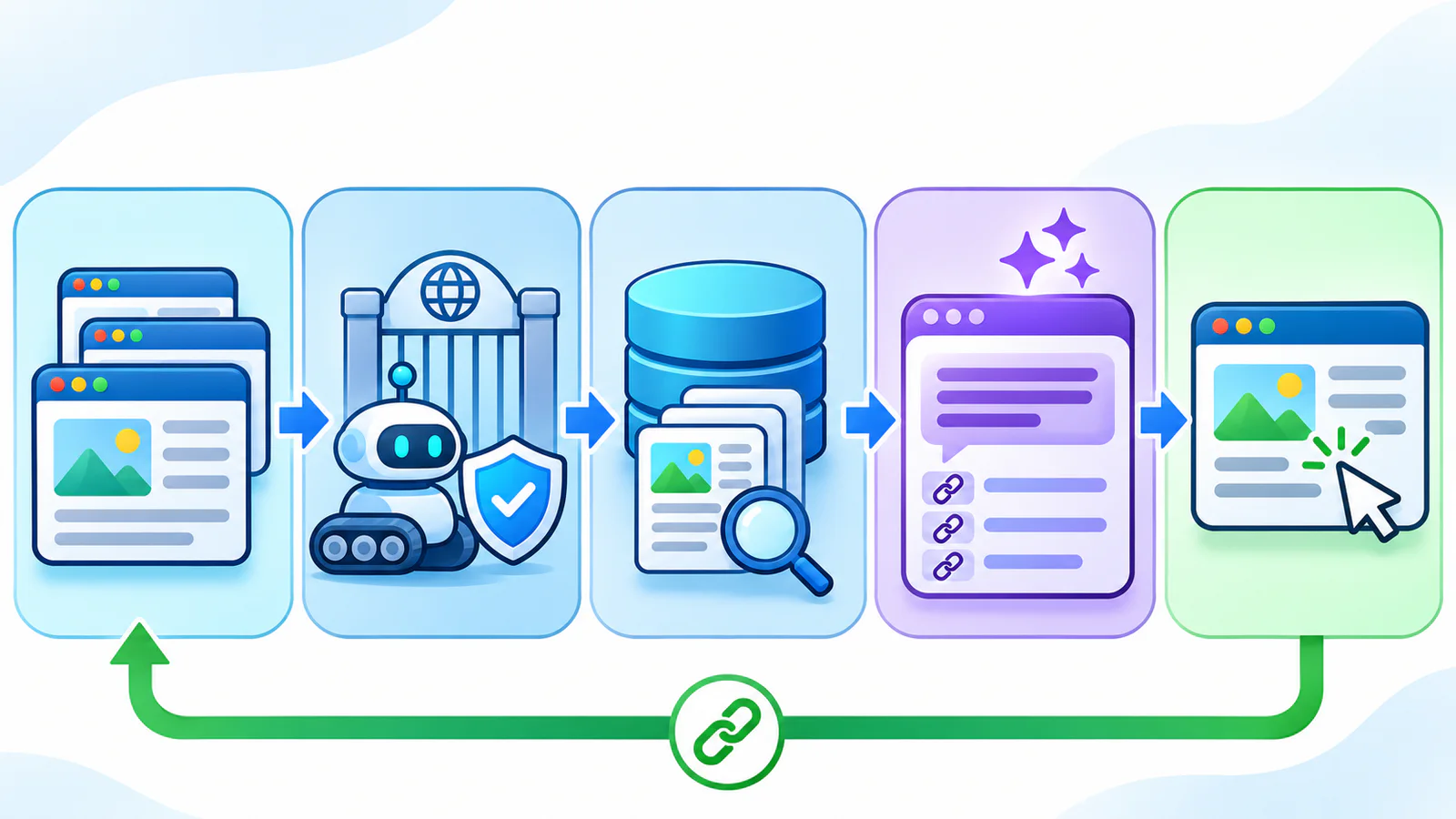
Traditional search engines commonly provide a ranked list of webpages. AI-assisted search can retrieve information from several sources and combine it into a conversational response. The exact process varies by product and query.
ChatGPT Search
ChatGPT can use web search to retrieve current information and may present links to external sources. OpenAI identifies OAI-SearchBot as a crawler used for search discovery. Allowing the crawler creates eligibility for discovery; it does not guarantee inclusion.
Google AI Overviews
Google may show AI-generated summaries and supporting links for selected searches. Established Search requirements—including indexing, crawlability, snippet eligibility, useful content, and spam-policy compliance—remain important.
Perplexity
Perplexity retrieves information from web sources and commonly presents citations that readers can open. Source selection depends on the question, retrieval context, and the platform's own systems.
Step 2: Build a Strong Technical SEO Foundation
AI search optimization cannot compensate for serious technical problems. Start by making important webpages easy for visitors and intended crawlers to access.
- Check indexing. Inspect priority URLs in Google Search Console and resolve reported exclusions or technical errors.
- Maintain an XML sitemap. Include canonical public URLs and submit the sitemap through supported webmaster tools.
- Improve mobile usability. Use responsive layouts, readable typography, clear navigation, and appropriately sized controls.
- Repair broken links. Keep essential internal paths and supporting references current.
- Improve performance. Compress images, remove unnecessary scripts, configure caching, and review real-user performance.
Step 3: Optimize Your Website for ChatGPT Search
Review OAI-SearchBot access
Website owners who want public pages to be eligible for ChatGPT Search discovery should review whether OAI-SearchBot is allowed by robots.txt, firewall rules, and bot-protection services. Evaluate any change alongside the site's privacy and security requirements.
Understand crawler purposes
OpenAI documents different agents for different purposes. OAI-SearchBot supports search discovery, while GPTBot and ChatGPT-User serve other documented roles. Review the current official guidance before changing access policies.
Publish accessible, useful information
Keep important service descriptions, product information, educational resources, and business facts available on suitable public webpages. Explain the subject fully instead of producing thin pages around isolated keywords.
An Allow directive cannot guarantee that a page will be retrieved, selected, summarized, cited, or recommended.
Step 4: Optimize for Google AI Overviews
Google's generative Search features build on established Search foundations. A page generally needs to be indexed and eligible for a search snippet before it can appear as a supporting link.
- Follow Search Essentials. Meet technical requirements and avoid deceptive content, manipulative links, and low-value scaled pages.
- Review participation controls. Make sure Search settings reflect your publishing goals.
- Make content understandable. Use descriptive titles, logical headings, complete explanations, and relevant internal links.
- Add useful supporting media. Original diagrams, screenshots, videos, and product photographs can clarify complex information.
- Improve valuable existing pages first. Prioritize pages already connected to customer questions, qualified traffic, or inquiries.
Step 5: Improve Visibility in Perplexity
Perplexity can reference publicly available information when generating answers. Review whether your robots.txt, firewall, and content-delivery settings permit the access you intend, using the platform's current crawler documentation.
Create research-friendly content that explains comparisons, costs, responsibilities, limitations, and decision criteria. Link important factual claims to primary documentation where appropriate and distinguish verified facts from estimates or opinions.
There is no official formula that guarantees Perplexity citations. Accurate, accessible information is more sustainable than repetitive pages targeting artificial “AI SEO” keywords.
Step 6: Research Conversational AI Search Questions
AI search users often ask longer questions containing several needs. “WordPress website cost” might become “How much should a small business budget for a WordPress website, including hosting, design, and maintenance?”
| Business topic | Conversational question |
|---|---|
| Website design | Which website platform is best for a small business? |
| SEO | How long does SEO usually take to produce results? |
| Digital marketing | Which marketing channel suits a limited budget? |
| WordPress | Is WordPress better than a custom website? |
| E-commerce | What should an online store include before launch? |
| AI search | How can a website become discoverable in ChatGPT Search? |
Find useful questions in customer inquiries, sales conversations, Search Console data, support tickets, and site search. AI brainstorming can suggest possibilities, but validate those ideas against real audience needs.
Step 7: Create Content That Deserves to Be Referenced
- Publish original research. Explain the method, sample, limitations, and permissions behind new findings.
- Write practical tutorials. Define the problem, describe the solution, and provide steps readers can follow.
- Include genuine case studies. Document the starting point, work performed, measurement period, and verified outcome.
- Support important claims. Link to official documentation and credible primary sources.
- Review changing information. Update pages when software, policies, prices, or reporting features change.
Step 8: Use an Answer-First Content Structure
State the essential answer near the beginning of each important section, then add context, evidence, qualifications, examples, and next steps. Use descriptive H2 and H3 headings, tables for genuine comparisons, numbered steps for processes, and concise paragraphs for explanations.
The objective is to make information easier to use—not to turn every paragraph into an artificial question-and-answer block.
Step 9: Build Website Trust and Business Credibility
- Create a genuine About page. Explain the organization, relevant experience, and who is responsible for the content.
- Publish accurate contact details. Keep business names, locations, services, and contact information consistent.
- Identify authors. Describe relevant expertise without exaggeration.
- Earn legitimate mentions. Useful resources and professional contributions can attract editorial references naturally.
- Use authentic testimonials. Never fabricate reviews, results, or customer experiences.
Step 10: Use Structured Data Without Overpromising
Structured data can describe supported visible content through types such as Article, Organization, LocalBusiness, Product, and BreadcrumbList. Use it accurately and follow the applicable guidelines.
Structured data can clarify content for supported systems, but it does not guarantee placement in ChatGPT, Google AI Overviews, or Perplexity.
Step 11: Measure AI Search Visibility
Search Console
Review relevant search impressions, pages, devices, countries, indexing, and available generative-search reporting.
Bing Webmaster Tools
Use supported AI Performance reporting to investigate citations, pages, and topic-level visibility.
Website analytics
Measure recognizable AI referrals, engagement, qualified inquiries, conversions, and revenue.
Manual checks
Test a stable set of customer questions and record citations, mentions, accuracy, and changes over time.
AI answers can vary by platform, location, account context, and date. Treat manual checks as observations rather than exact ranking reports.
Step 12: Avoid Common AI SEO Mistakes
- Believing rankings are guaranteed. No legitimate technique guarantees a recommendation or citation.
- Blocking intended crawlers accidentally. Review access carefully while maintaining privacy and security.
- Publishing repetitive AI-generated articles. Add meaningful original value and human factual review.
- Ignoring technical SEO. Broken links and inaccessible pages limit discovery.
- Buying fake citations or mentions. Fabricated authority is not a durable strategy.
- Ignoring business outcomes. Evaluate visibility alongside qualified traffic, leads, revenue, and engagement.
Step 13: Follow a 30-Day AI Search Optimization Plan
Audit discovery
Review indexing, sitemaps, performance, crawler controls, important pages, and technical accessibility.
Improve answers
Research customer questions and strengthen titles, headings, explanations, examples, and internal links.
Build credibility
Publish original evidence, improve authorship, verify business facts, and support important claims.
Measure outcomes
Review search performance, AI visibility, referrals, engagement, conversions, and unresolved gaps.

This plan creates a repeatable process. It does not promise citations or traffic growth within 30 days.
