

Search engine optimization has changed significantly with the development of artificial intelligence. Businesses once focused primarily on ranking webpages in Google. People now also use tools such as ChatGPT, Google AI experiences, Microsoft Copilot, and Perplexity to discover information, compare products, and research businesses.
This shift has introduced two widely discussed concepts: Answer Engine Optimization (AEO) and Generative Engine Optimization (GEO).
Traditional Search Engine Optimization (SEO) remains essential. Modern digital marketing increasingly involves improving content visibility across conventional search results, direct-answer experiences, and AI-generated responses. This guide explains the differences and shows how to build one practical strategy for all three.
Be discovered
Help search engines crawl, understand, index, and present useful webpages.
Answer clearly
Make accurate answers easy for people and answer-oriented systems to identify.
Be referenceable
Publish credible, distinctive information that AI-assisted research can understand.
Step 1: What Is SEO?
Search Engine Optimization is the process of improving a website's visibility in organic search results. SEO helps search engines discover, understand, index, and present relevant content to people searching for information.
Imagine a digital marketing company in Amritsar. When someone searches for “best digital marketing agency in Amritsar,” effective SEO can improve the website's chance of appearing in relevant organic results.
How does SEO work?
- Keyword research: identify relevant words, questions, and topics customers search for.
- On-page SEO: improve titles, headings, descriptions, URLs, images, and page content.
- Technical SEO: improve crawlability, indexing, mobile usability, architecture, and performance.
- Off-page SEO: build reputation through editorial links, references, and relevant mentions.
- Local SEO: improve location-based visibility through accurate business details and locally relevant pages.
SEO can increase relevant organic traffic, brand awareness, service discovery, and inquiries. Results are not immediate or guaranteed; competition, search intent, content quality, and search-system changes all affect performance.
Step 2: What Is AEO?
Answer Engine Optimization is an approach to organizing accurate information so users and answer-oriented systems can identify clear responses to specific questions.
People increasingly ask complete questions: What is the difference between SEO and AEO? How much does website design cost? Which marketing strategy is best for a small business? AEO encourages publishers to answer these questions directly before expanding into detail.
Important AEO techniques
- Use question-based headings. Make the information need explicit.
- Give a direct answer first. Follow it with context, evidence, examples, and limitations.
- Answer genuine FAQs. Use questions customers actually ask rather than manufacturing repetitive variations.
- Organize complex information. Tables, steps, lists, and descriptive headings improve comprehension.
- Keep answers accurate. Review changing claims, dates, prices, laws, and software guidance.
Clear answers can make a page more useful and easier to interpret, but they do not guarantee featured snippets, voice-assistant inclusion, or AI citations.
Step 3: What Is GEO?
Generative Engine Optimization refers to improving the discoverability, clarity, and credibility of content for AI-powered search and answer experiences.
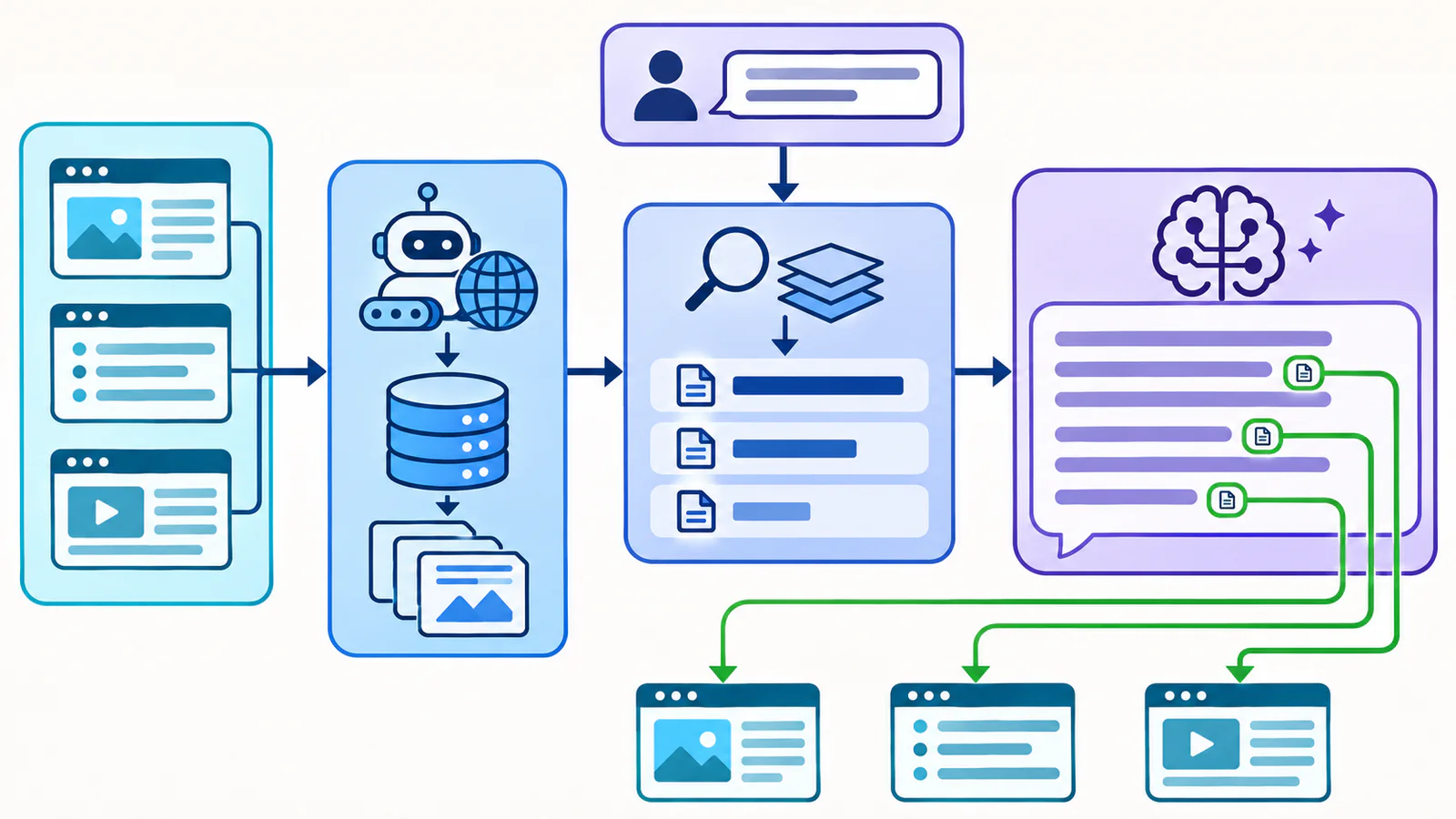
Generative systems may retrieve and combine information from several sources to create a conversational response. Different platforms use different retrieval, ranking, summarization, and citation methods, so there is no universal GEO formula.
Important GEO techniques
- Publish original information. Add real case studies, research, examples, and observations.
- Demonstrate expertise. Identify who created the content and why readers can trust it.
- Provide verifiable facts. Link important claims to reliable primary sources.
- Maintain consistent information. Keep business facts accurate across the website and relevant public profiles.
- Make content accessible. Ensure important pages can be found and read by the search crawlers and retrieval systems you choose to permit.
GEO can support brand discovery and create opportunities for citations, but visibility varies by platform, prompt, location, freshness, and retrieval system.
Step 4: AEO vs GEO vs SEO
The three approaches overlap, but their emphasis differs.
| Feature | SEO | AEO | GEO |
|---|---|---|---|
| Full form | Search Engine Optimization | Answer Engine Optimization | Generative Engine Optimization |
| Primary focus | Organic search visibility | Clear, direct answers | AI-assisted discovery and citations |
| Typical environment | Search-result pages | Answer-focused search features | Generative AI and conversational search |
| Content emphasis | Relevant, useful webpages | Questions and concise answers | Credible, detailed, verifiable information |
| Useful measurements | Clicks, rankings, impressions | Answer visibility and engagement | Relevant mentions, citations, and referrals |
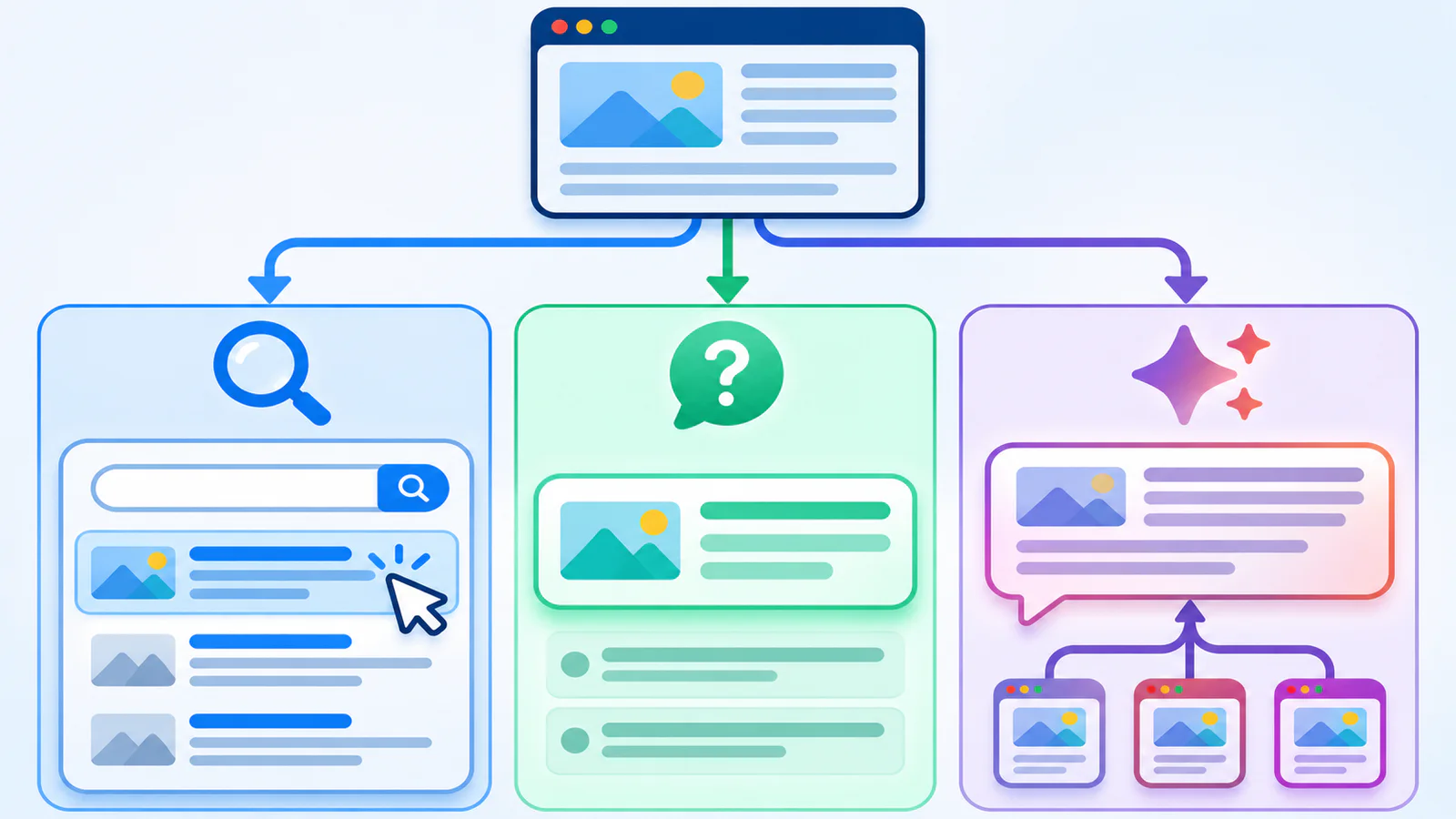
A carefully researched page with sound technical SEO, concise answers, and verifiable evidence can support SEO, AEO, and GEO together.
Step 5: Optimize Your Website for SEO
Perform intent-led keyword research
Use Search Console queries, customer language, keyword tools, and competitor research to identify useful topics. Choose phrases based on relevance and intent rather than estimated volume alone.
Write descriptive titles and summaries
Explain the page accurately. Avoid keyword stuffing and misleading promises. A useful meta description summarizes the specific page and helps relevant searchers decide whether to visit.
Improve performance and accessibility
Optimize image dimensions and formats, remove unnecessary scripts, use reliable hosting, support mobile devices, and monitor Core Web Vitals. Performance work should improve real user experience, not chase one isolated score.
Strengthen internal links
Connect related pages with descriptive anchor text. Internal links help visitors navigate and help crawlers discover how topics relate.
Step 6: Optimize Content for AEO
Identify common questions
Review Search Console, customer support conversations, sales inquiries, site search, and relevant search suggestions. Prioritize questions connected to real decisions.
Answer clearly
Place a straightforward answer near the beginning of its section. Add qualifications, examples, comparisons, and practical instructions after the concise response.
Use structured data accurately
Article, Breadcrumb, Product, Organization, and other supported structured-data types can clarify visible content. Markup must represent what readers can actually see. Valid structured data creates eligibility for supported features; it does not guarantee a rich result.
Keep important answers updated
Review articles that discuss changing software, prices, regulations, or industry practices. Concise answers are only valuable when they remain reliable.
Step 7: Optimize Content for GEO
Build topical authority
Develop a connected library around genuine expertise. A digital marketing site might cover SEO fundamentals, technical audits, local marketing, website design, structured data, and AI search without publishing near-duplicate pages.
Include original examples
Publish substantiated case studies that describe the starting point, objective, work completed, measurement period, and verified outcome. Never invent performance figures.
Build trust and transparency
Provide genuine author details, contact information, clear service descriptions, dates, and links to primary research or official technical documentation.
Improve technical accessibility
Keep intended public pages indexable, maintain working navigation and sitemaps, and review crawler controls. Allowing a crawler enables access; it does not guarantee retrieval, citation, or inclusion.
Monitor AI visibility
Test representative customer questions across relevant AI search products. Record whether the business appears, whether the description is accurate, which pages are cited, and whether referral traffic converts. Use observations to improve missing or unclear information.
Step 8: Tools for SEO, AEO, and GEO
Google Search Console
Monitor indexing, organic queries, impressions, clicks, and technical issues.
Google Analytics
Measure visits, engagement, events, and conversions after discovery.
Ahrefs and Semrush
Support keyword, link, competitor, audit, and visibility research; available features vary by plan.
Bing Webmaster Tools
Review search performance and, where available, AI Performance citation reporting.
Google Rich Results Test
Check supported structured data for technical eligibility without assuming appearance is guaranteed.
Step 9: Common Mistakes
- Treating SEO, AEO, and GEO as unrelated channels. They share foundations in accessibility, usefulness, accuracy, and credibility.
- Keyword stuffing. Repetition makes content less useful and can violate spam policies.
- Publishing generic AI content at scale. Repetitive pages without distinct value weaken the site.
- Ignoring technical SEO. Content that cannot be accessed or indexed may remain invisible.
- Adding unsupported statistics. Fabricated claims reduce trust.
- Promising guaranteed AI citations. Platforms choose their own sources and results vary.
- Measuring rankings alone. Include engagement, conversions, search impressions, citations, mentions, and referrals.
Step 10: Build a Combined Monthly Strategy
Research and audit
Review the audience, search performance, technical issues, competitors, and customer questions.
Create and improve content
Write clear explanations with useful examples, evidence, images, internal links, and authorship.
Technical optimization
Check indexing, mobile behavior, broken links, performance, schema, sitemaps, and crawler controls.
Measure and prioritize
Evaluate impressions, clicks, engagement, conversions, citations, and relevant AI mentions.

Repeating this process allows the strategy to develop from observed results instead of unverified optimization tricks.
